If you are going to plant your garden plan in the ground then the sod will need to be removed. Below is one approach to removing the sod.
If you do not want to cut the sod out of your planned garden space then a tiller will be required. The general process of how a tiller works is it grinds up the roots and plant material into the soil. One disadvantage to this technique is you will bring up weed seeds that you will need to deal with when the seeds germinate
This technique will take the longest but it does not require equipment. The best part of the approach is once you have the ingredients down to smoother the grass, you plant directly on top of the prepared garden space without having to worry about weeds poking up or having special equipment.
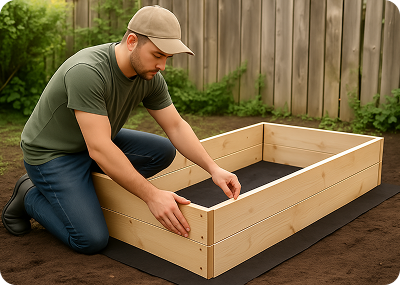
To be a successful gardener, you must start off with the best garden space by which to plant your design. A raised bed is a great garden space to create. It is inexpensive, and easy to maintain. The key is preparation. Below are directions to help you create the best raised bed that will help you in your gardening journey.
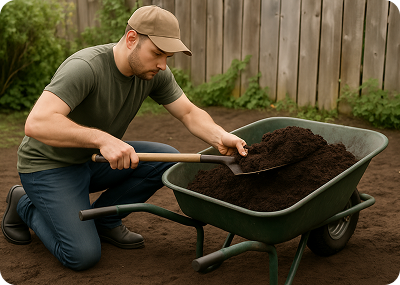
Once you have built and placed your raised bed in your garden space, the next step is to fill it. While you could just get some all purpose soil to fill your bed, it does not contain ingredients that are important to raised bed gardening, such as peat moss for water retention.
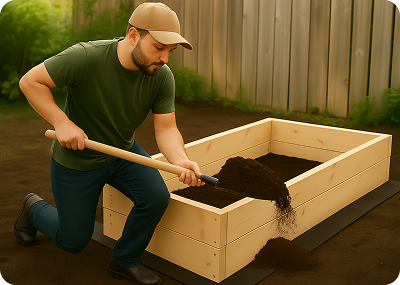
The chore of filling a raised bed seems simple but there is a science behind the technique. A raised bed filled to the top will overflow when watered, which is a waste. Not adding enough prepared soil will not provide your plants enough growing medium to be successful. The ½ inch from the top rim is the ideal level the soil should be for a raised bed.
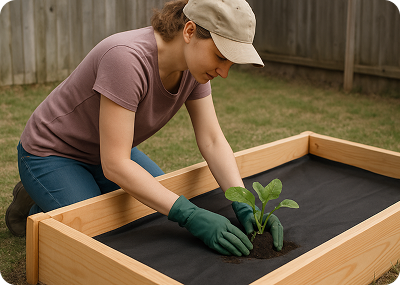
Success is not only based on the soil but also how you plant your material. The directions below provide you a general guide on how to properly set up and plant your garden design.
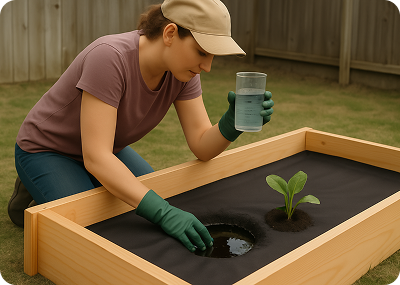
What is a percolation test? It is a soil test that is done to see if your soil is well draining. Why is this important? If you have soil that drains too quickly or too slowly then you will need to address the problem so that your garden space can be successful.
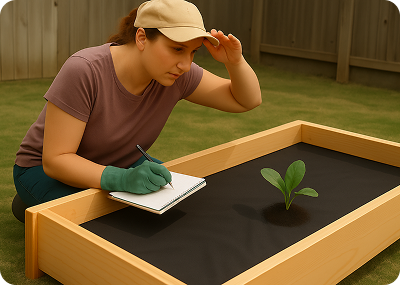
While you can look out at your planned garden space and guess what type of sun exposure it receives or you can use somewhat of a scientific approach to narrow down your area’s sun exposure. Keep in mind that the sun exposure is seasonal if deciduous trees are around the planned area.
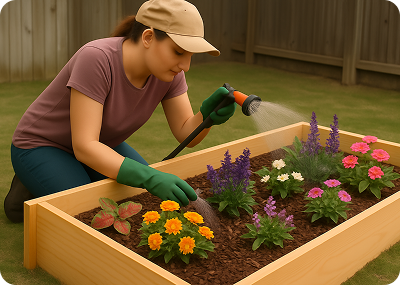
While Mother Nature does not always drop moisture from the sky in the morning, which is best but you as the gardener can take control by learning how and when to properly water. Learning this skill will improve your yield and reduce the chances of developing a plant disease.
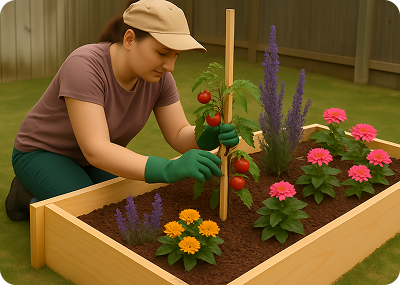
Providing the proper support for plants increases yields, reduces plant diseases, and reduces pest damage. Beyond the stake, the key is to make sure that you do not tie the plant so tight that it cuts or griddles the stem, which will cause death and/or reduced yield.
Landscape Fabric is a tool and like most tools does require some maintenance over there years. When used properly the benefits are fantastic. It saves you countless hours weeding your landscape beds, eliminates the need for harmful weed killers, and helps to conserve water.
Landscape Fabric is composed of a Woven Polypropylene. It is not biodegradable, but is not designed to be! The woven polypropylene fabric has tiny holes in between the weaves. Small enough to suppress weed growth but large enough to allow water, air and nutrients to pass through to the plants roots.
Most homeowners opt to cover their planting beds with mulch to add a nice clean manicured look and to help protect the plants roots and conserve water. And we recommend you do!
Over the course of a year mulch can start to break down. When this happens weed can blow into the bed and start to germinate. In order to prevent this, we recommend removing all of the mulch from the beds every 1 or 2 years and replacing it with fresh mulch. Not only will your beds look better and function better, but you will not have to worry about weed growth.
Sign up below to get exclusive deals, discounts, and new plant collections—delivered straight to your inbox! Plus, stay inspired with the latest gardening tips, landscaping trends, and DIY garden ideas. Start growing with us today!
A big thank you for subscribing to the PBN Design newsletter.
We're thrilled to have you join our community. Get ready for exciting updates, insightful content, and more delivered straight to your inbox.
Stay tuned!
Go back

